Here is a founder-focused blog post designed for Indian startup founders, entrepreneurs and leadership teams. The tone is practical and thought-provoking rather than promotional. It positions expert support around measurable business outcomes, while naturally introducing the value of experienced external experts.
What Do Indian Startups Really Need from Business Experts? 10 Outcomes That Can Make or Break Your Startup
Building a startup is difficult. Building a sustainable, profitable and scalable business is even harder.
India has become one of the world’s most vibrant startup ecosystems. Thousands of entrepreneurs are building products, launching technology platforms, raising capital and exploring new markets.
Yet, behind the excitement of startup launches, funding announcements and rapid growth stories, founders face a common set of challenges.
Some struggle to find customers. Others build products that customers are unwilling to pay for. Some generate impressive revenue but struggle with cash flow and profitability. Others have good products but lack the technology architecture, leadership capabilities or business processes required to scale.
This raises an important question:
What do Indian startups actually need from experienced business and technology experts?
Is it mentorship? Business consulting? Technology advice? Fundraising assistance? Or something more tangible?
The reality is that founders rarely need another presentation explaining what they should do. They need people who can help them solve real business problems and achieve measurable outcomes.
Let’s explore the ten most important outcomes Indian startups seek from external experts.
1. Customer Acquisition and Predictable Revenue Growth
For most startups, acquiring paying customers is one of the biggest challenges.
Founders may have an innovative product, a capable team and even initial funding. However, without a reliable customer acquisition strategy, sustaining the business becomes difficult.
Common challenges include:
Identifying the right customer segments.
Reaching decision-makers and potential buyers.
Building an effective sales pipeline.
Converting leads into paying customers.
Improving customer retention and repeat business.
Establishing predictable revenue streams.
Many startups depend heavily on founder-led sales. While this works during the initial stages, it becomes a bottleneck as the business grows.
What founders need from experts:
Experts who can help design and implement a repeatable customer acquisition and revenue generation system.
This may include market segmentation, ideal customer profiling, sales strategy, lead generation, sales process design, CRM implementation and conversion optimisation.
The desired outcome: More paying customers, shorter sales cycles, better conversion rates and predictable revenue growth.
2. Achieving Product-Market Fit
Building a product is not the same as building a business.
One of the most expensive mistakes a startup can make is investing months or years developing a product without validating whether customers genuinely need it.
Founders often confuse positive feedback with actual market demand. People may appreciate a product demonstration, express interest or participate in a pilot, but that does not necessarily mean they are willing to pay.
Product-market fit requires much deeper validation.
Common challenges include:
Understanding real customer pain points.
Identifying problems customers consider important enough to pay for.
Validating product assumptions before investing heavily.
Prioritising features based on customer value.
Developing suitable pricing and packaging.
Converting pilot users into paying customers.
What founders need from experts:
Experienced product and business professionals who can connect customer research, business strategy, product design and technology execution.
Rather than simply recommending additional features, experts should help founders determine what not to build.
The desired outcome: A product that solves a meaningful problem, attracts paying customers and has a credible path towards sustainable growth.
3. Profitability, Cash Flow and Financial Discipline
Revenue growth can create a misleading picture of business health.
A startup may be acquiring customers, expanding its team and reporting impressive topline numbers while simultaneously consuming cash at an unsustainable rate.
Growth without financial discipline can become dangerous.
Common challenges include:
Poor understanding of unit economics.
Inadequate pricing and gross margin management.
High customer acquisition costs.
Delayed customer payments.
Uncontrolled operating expenses.
Excessive dependence on external funding.
Poor financial forecasting and cash-flow visibility.
Startups must understand not just how much money they generate, but how much they retain and how efficiently they use their resources.
What founders need from experts:
Financial and business experts who can help establish sound financial management practices, improve unit economics, optimise pricing, monitor working capital and develop meaningful financial dashboards.
The desired outcome: Better cash-flow management, healthier margins, improved financial visibility and a sustainable path towards profitability.
4. Building Scalable Technology and Product Architecture
Technology is often at the heart of modern startups.
However, technology decisions made during the early stages can have long-term consequences.
Startups sometimes prioritise speed over architecture, select technologies without considering future requirements or develop products without sufficient attention to security, reliability and maintainability.
As customers and transaction volumes increase, these decisions can become expensive to correct.
Common challenges include:
Choosing the right technology stack.
Building a reliable MVP.
Managing technical debt.
Designing scalable software architecture.
Improving application performance and security.
Integrating third-party platforms.
Establishing engineering standards and delivery practices.
What founders need from experts:
Experienced technology leaders who understand both business objectives and software engineering.
They should be capable of translating business strategy into technology architecture, development roadmaps, engineering practices and scalable product platforms.
The desired outcome: A dependable technology foundation that supports business growth without unnecessary development costs or recurring technical problems.
5. Fundraising and Investor Readiness
Raising capital is an important milestone for many startups, but fundraising should not become the business strategy itself.
Investors look beyond attractive presentations. They want to understand the market opportunity, business model, customer traction, financial discipline, competitive advantage and leadership capabilities.
Common challenges include:
Developing a compelling investment proposition.
Building realistic financial projections.
Demonstrating product-market fit.
Establishing credible growth assumptions.
Preparing documentation for due diligence.
Identifying suitable investors.
Communicating the business vision effectively.
What founders need from experts:
Professionals who can help prepare the business for investor scrutiny, strengthen its commercial proposition and organise the information required for fundraising.
Legal, financial and investment-related matters should involve appropriately qualified professionals.
The desired outcome: An investment-ready business with a credible growth proposition and improved fundraising preparedness.
6. Business Model and Growth Strategy
Some startups have good products but lack clarity about how to build sustainable businesses around them.
They may struggle with pricing, customer segmentation, distribution channels, monetisation or competitive positioning.
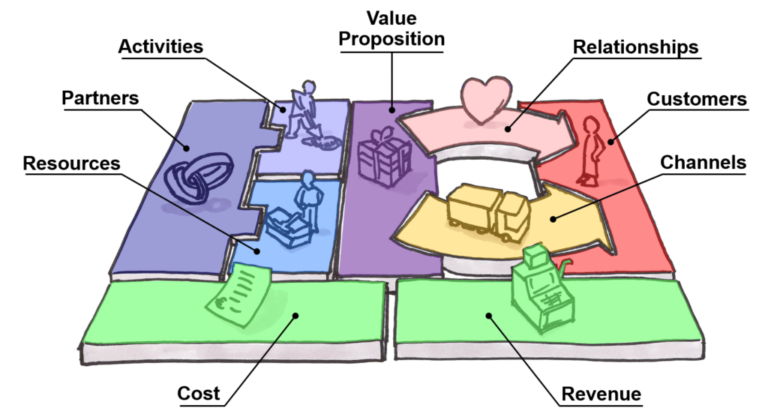
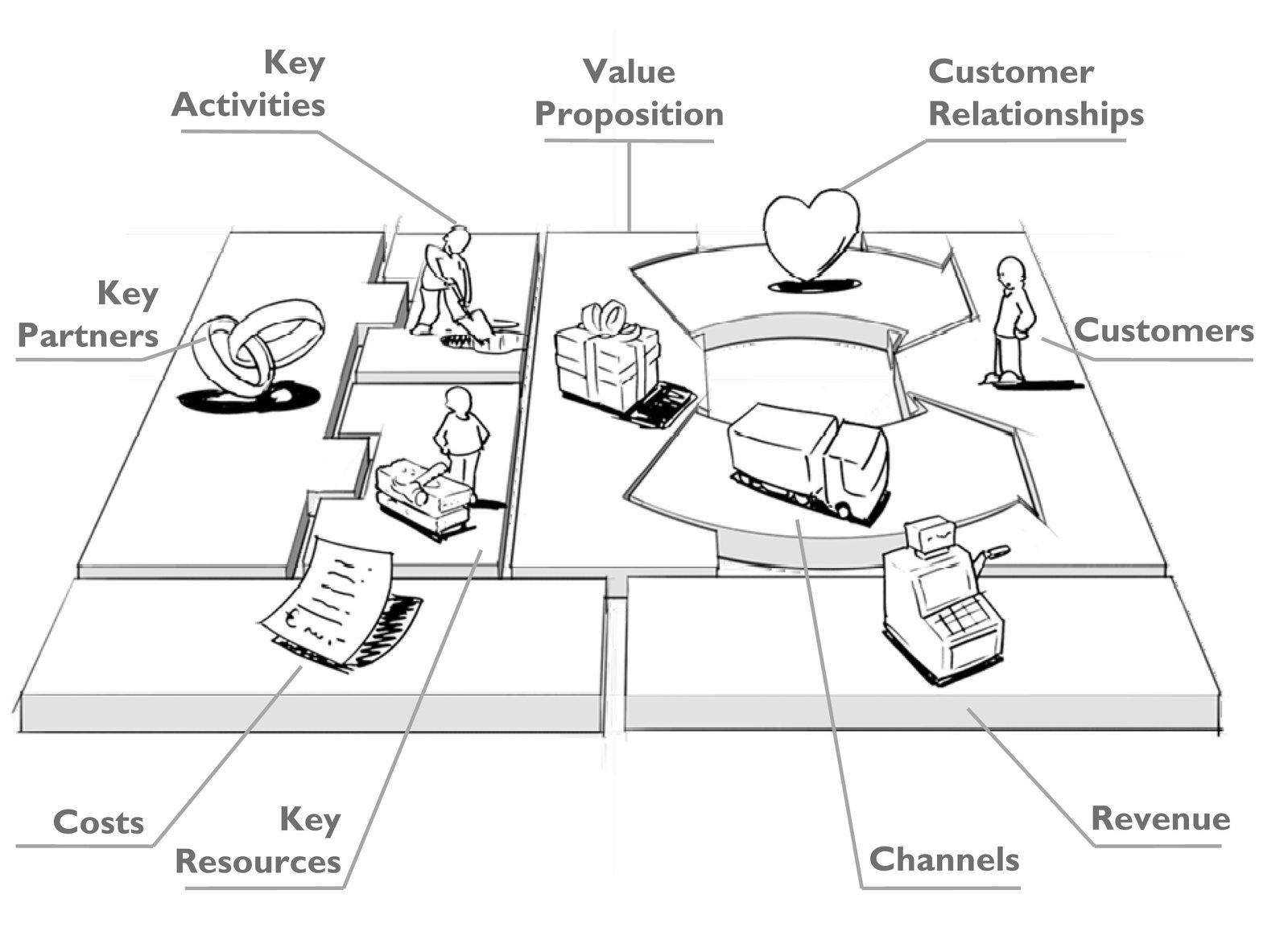
A business model must answer fundamental questions:
Who are our customers?
What problems are we solving?
Why should customers choose us?
How do we acquire customers?
How do we generate revenue?
What does it cost to serve customers?
How can the business grow profitably?
What founders need from experts:
Business strategists who can evaluate the existing business model, identify growth opportunities, assess market positioning and translate strategy into practical execution plans.
The emphasis should be on decisions that can be implemented, measured and improved.
The desired outcome: A clearly defined business model, stronger competitive positioning and a practical roadmap for sustainable growth.
7. Leadership, Team Building and Execution
In the early stages, founders often perform multiple roles.
They handle sales, product development, recruitment, customer support, fundraising and business operations.
This may work initially, but it becomes increasingly difficult as the organisation grows.
The founder eventually becomes the bottleneck for important decisions and everyday execution.
Common challenges include:
Hiring the right people.
Building a capable second line of leadership.
Defining roles and responsibilities.
Establishing accountability.
Improving cross-functional collaboration.
Aligning co-founders and senior leaders.
Building a performance-oriented culture.
What founders need from experts:
Experienced leaders, organisational consultants and executive coaches who can help establish leadership structures, improve decision-making and develop effective execution practices.
The desired outcome: A capable team that can deliver business objectives without depending on the founder for every decision.
8. Business Process Improvement and Automation
As startups grow, informal processes that once worked efficiently begin creating operational problems.
Information gets scattered across spreadsheets, communication applications and disconnected business systems.
Teams spend considerable time on repetitive activities, manual reporting, follow-ups and data reconciliation.
These inefficiencies increase operating costs and reduce management visibility.
Common challenges include:
Fragmented business processes.
Manual data entry and reporting.
Poor integration between applications.
Inconsistent workflows.
Limited visibility into operational performance.
Dependency on individuals for critical activities.
What founders need from experts:
Business transformation and technology professionals who can analyse existing workflows, identify bottlenecks, redesign processes and implement appropriate automation.
Importantly, automation should not simply digitise inefficient processes. Businesses should first simplify and standardise their operations.
AI and advanced automation can create additional value where sufficient data, suitable use cases and measurable business benefits exist.
The desired outcome: Lower operating costs, reduced manual effort, fewer errors, faster execution and improved management visibility.
9. Marketing, Branding and Distribution
Having a good product does not guarantee that the market will discover it.
Many startups invest in product development but underestimate the importance of positioning, marketing and distribution.
Without a clear go-to-market strategy, even a useful product can struggle to gain traction.
Common challenges include:
Unclear brand positioning.
Inconsistent marketing communication.
Poor understanding of target audiences.
Ineffective digital marketing expenditure.
Limited distribution channels.
Lack of strategic partnerships.
Difficulty demonstrating differentiation.
What founders need from experts:
Marketing and growth professionals who understand customer behaviour, market positioning, digital channels, partnerships and revenue generation.
Marketing activities must be connected to business objectives rather than measured only through impressions, followers and website traffic.
The desired outcome: Stronger market visibility, qualified business opportunities, improved customer acquisition and measurable marketing returns.
10. Regulatory, Legal and Compliance Readiness
As startups grow, regulatory and compliance requirements become increasingly important.
Depending on the industry, businesses may need to address company structuring, shareholder agreements, intellectual property, data protection, cybersecurity, employment regulations and industry-specific compliance.
Ignoring these responsibilities can create serious commercial and operational risks.
What founders need from experts:
Qualified legal, financial, cybersecurity and regulatory professionals who can help establish appropriate compliance practices and reduce avoidable risks.
The desired outcome: A business that is better prepared for enterprise customers, strategic partnerships, investment due diligence and market expansion.
The Support Startups Need Changes with Their Stage of Growth
Not every startup needs the same kind of expert support.
The challenges of an entrepreneur validating an idea are very different from those of a company generating several crores in annual revenue.
A useful way to understand these changing requirements is to examine the startup lifecycle.
| Startup stage | Primary challenge | Expert support required |
|---|---|---|
| Idea / Pre-seed | What should we build? | Market validation, business model and customer research |
| MVP / Seed | Will customers pay? | Product-market fit, MVP development and initial sales |
| Early revenue | How do we grow? | Sales, marketing, pricing and distribution |
| Growth stage | How do we scale? | Technology architecture, processes and leadership |
| Scale-up | How do we improve profitability? | Financial control, automation and governance |
| Expansion | How do we enter new markets? | Market expansion, partnerships and organisational transformation |
The most effective expert support is therefore stage-specific, problem-oriented and measurable.
Why Startups Should Look Beyond Traditional Consulting
Traditional consulting often focuses on assessments, recommendations, presentations and strategic roadmaps.
These can be useful, but founders increasingly need more than recommendations.
They need experts who can participate in execution, coordinate with internal teams, solve implementation challenges and demonstrate measurable improvements.
Consider the difference:
| Traditional consulting approach | Outcome-oriented expert support |
|---|---|
| Recommend a sales strategy | Help establish a functioning sales pipeline |
| Recommend a technology stack | Design and implement the technology foundation |
| Recommend process automation | Redesign and automate actual workflows |
| Recommend product improvements | Validate and deliver priority product capabilities |
| Recommend business KPIs | Establish dashboards and management reviews |
| Recommend organisational changes | Help implement roles, accountability and execution practices |
The value of an expert should not be measured by the number of meetings conducted or reports delivered.
It should be measured by the business problems solved and the improvements achieved.
Choosing the Right Expert: Questions Every Founder Should Ask
Before engaging a consultant, mentor, fractional executive or technology partner, founders should evaluate whether the person can deliver practical business value.
Consider asking:
Have you solved a similar problem for another business?
Do you understand our industry and business model?
Can you demonstrate how your work will improve business performance?
Will you participate in implementation or only provide recommendations?
What measurable outcomes should we expect?
How will progress and success be evaluated?
Can your engagement be structured around defined deliverables and milestones?
A good expert does not necessarily promise guaranteed results. Business outcomes depend on several factors, including market conditions, internal capabilities and founder commitment.
However, a credible expert should be able to explain the problem-solving approach, implementation plan, deliverables and success metrics.
Final Thoughts: Build Businesses, Not Just Startups
India has no shortage of entrepreneurial ambition, innovative ideas and talented professionals.
What many startups need is the ability to connect these strengths into sustainable business systems.
A great product needs customers. Customers need a compelling value proposition. Revenue needs financial discipline. Growth needs scalable technology. Technology needs effective processes. And all of these need capable leadership and disciplined execution.
Founders should therefore look beyond the traditional idea of hiring an expert for advice.
They should seek experienced professionals who can help them build stronger products, acquire customers, improve profitability, strengthen technology and establish scalable business operations.
The real value of an expert is not what they know. It is what they help your business achieve.
Ultimately, the objective is not simply to build a startup that attracts attention or raises funding.
It is to build a business that creates customer value, generates sustainable revenue, operates efficiently and is capable of scaling over time.
That is the difference between starting a business and building a successful one.
Suggested publishing package
Primary audience: Indian startup founders, co-founders, CEOs and early-stage leadership teams.
SEO title: What Do Indian Startups Need from Business Experts? 10 Key Outcomes
Suggested URL slug: what-indian-startups-need-from-business-experts
Meta description: Discover the 10 most important outcomes Indian startups need from business, technology and growth experts, from product-market fit and customer acquisition to profitability and scaling.
Primary keyword: Startup consulting services in India
Secondary keywords: Startup business experts, fractional CTO India, startup growth consulting, product-market fit consulting, technology consulting for startups, business process automation.
Suggested featured image concept: A founder and experienced business/technology expert reviewing a startup growth dashboard, with product, customers, revenue, technology and operations represented visually.
Suggested LinkedIn promotional headline:
Your startup may not need another mentor. It may need someone who can help you acquire customers, build the right product, improve profitability and scale operations.
The article’s central positioning is: Experts who help startups achieve business outcomes, not just offer advice.