
Most of us start a venture with big dreams. We want to be our own boss, build something meaningful, make good money, and take care of our family. But once we sit in the chair every morning, reality hits us hard.
There are vendor payments pending, staff members asking for leaves, GST filings around the corner, and customers bargaining for discounts. It is easy to feel overwhelmed. We often wonder: Is this what business is supposed to be? Why does it feel so heavy?
The truth is that running a commercial venture is not a smooth, clean journey. It is messy, daily, practical work. If we look past the difficult vocabulary and high-sounding corporate talk, what actually makes an enterprise tick? Let us break it down simply, step by step, keeping our Indian business reality in mind.
1. What Is a Business? The Real Machine Behind the Name
A business is not just a shop, a factory, a registered Pvt Ltd company, or a website.
A business is a living, working machine that performs continuously, in real time, every single day.
If the work stops today, the revenue stops tomorrow. A piece of agricultural land can sit quietly and grow in value, but an enterprise needs daily care, just like running a household kitchen.
To keep this machine running smoothly, you need four key parts working together:
THE FOUR PILLARS OF A SETUP
1. PEOPLE -The owner, managers, and ground staff
2. FUNCTIONS – 7 practical departments working daily
3. DISCIPLINE – Clear plans, schedules, and daily routines
4. TOOLS – Machines, software, tally, phones, trucks
The Seven Daily Functions
No matter whether you run a cloth store in Surat, a packaging unit in Peenya, an IT services agency in Pune, or a clinic in Coimbatore, every enterprise depends on seven essential functions. When even one gets ignored, the entire boat starts rocking.
Marketing (Reaching Out): This is simply letting people know you exist and how you can help them. It is not about shouting loud claims on billboards; it is about reaching the right person who has a genuine need for what you sell.
Sales (Building the Trust): Marketing brings someone to your door or sends a WhatsApp inquiry. Sales is the honest conversation where you understand their hesitation, answer their doubts, agree on a price, and close the deal with a handshake.
Operations (Delivering the Work): If sales is giving your word, operations is keeping it. It is manufacturing the goods, packing the boxes, coding the software, or serving the meal. It is the hard work of delivering the promise on time, every time.
Human Resources (Taking Care of People): Finding good people, training them, paying them fairly on the first of every month, and listening to their problems. Without this, your staff leaves, and you spend your entire life re-training new joiners.
Finance & Compliance (Money and Rules): Checking daily cash flow, managing working capital, keeping margins healthy, and filing your GST, TDS, and advance taxes on time. If you do not track your money carefully, a busy business can still go broke.
Management (Bringing Order): Making sure everyone knows what they are supposed to do by 10 AM. Without management, five people do the same task while an urgent client delivery is completely forgotten.
Research & Development (Staying Relevant): Markets change fast. What worked five years ago will not work today. This is the simple habit of asking: How can we make our product better, faster, or cheaper next year?
Plans, Schedules, and Tools
Good intentions do not run a company. If you tell your team, “Let’s increase sales this month,” nothing happens.
You need:
A Plan: Who are we targeting? What is our price?
A Schedule: How many calls will the sales team make before 2 PM every day?
The Right Tools: Do they have a reliable computer, a working vehicle, proper WhatsApp business tools, or accounting software like Tally or Zoho?
When these elements are in place, the owner does not have to scream and micromanage every minute of the day.
2. The Three Partners: Finding the Win-Win Balance
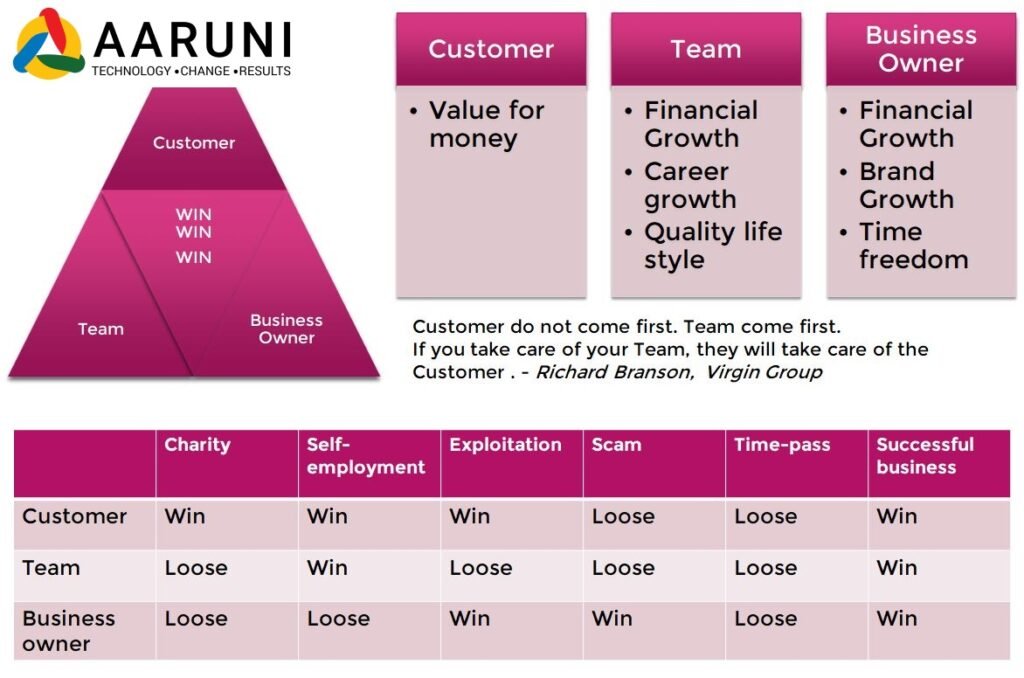
At its heart, any sustainable trade is a repeating cycle between three people: The Owner, The Team, and The Customer.
- Business Owner – Time Freedom & Growth (brand as well as financial)
- Team – Respect, Growth (financial as well as career)
- Customer – Good Value for Hard-Earned Money
Every party has a valid reason to be here:
The Owner takes big risks, puts up capital, and wants fair profits, a good reputation, and the freedom to spend time with family.
The Team Member gives their best working hours and wants a steady income, respect, personal growth, and peace of mind at home.
The Customer spends hard-earned money and wants honest quality, fair pricing, and dependable support.
When all three get what they came for, the company prospers for decades. But when the balance breaks, the enterprise becomes unhealthy. Let us look at what usually happens across our markets:
Five Ways Businesses Fall Out of Balance
| The Setup | Who Wins? | Who Suffers? | What Happens in the End? |
| 1. The Charity Model | Customer | Owner & Team | You give too much discount and over-service the client. The staff is underpaid, the owner takes home zero profit, and eventually, the business shuts down due to lack of funds. |
| 2. The Self-Employment Trap | Customer & Team | Owner | The staff gets their salary on time, and customers get great service. But the owner works 16 hours a day, takes all the stress, earns less than an employee, and cannot take a single day off. |
| 3. The Cheat/Scam Model | Owner | Customer & Team | The owner pockets huge money by cutting corners on quality, delaying vendor dues, and paying poor wages. Such people may show off quick money, but their reputation and business soon collapse. |
| 4. The Exploitation Model | Owner & Customer | Team | The customer gets cheap rates and the owner makes good margins, but only by overworking the staff late into the night with poor salaries and no dignity. Soon, the best workers leave. |
| 5. The “Time-Pass” Venture | Nobody | Everybody | A half-hearted hobby shop or venture run without serious effort. Capital gets wasted, employees learn nothing, customers feel cheated, and money slowly burns away. |
3. Why Your Team Must Come First
In our markets, we often hear the English phrase, “Customer is King.”
It sounds nice on paper. But as an owner, ask yourself: Can you personally attend to 500 or 5,000 customers every single day? You cannot.
The people who actually meet your customers, pack their orders, take their calls, and solve their problems are your ground-level team.
- Business Owner Takes Care of
- Well-Supported Team Members
- Care for Satisfied, Loyal Customers
If your staff is constantly worried about delayed salaries, if they are insulted in front of others, or if they work in poor conditions, they will pass that frustration straight to your customer. They will speak rudely on the phone and do sloppy work on the shop floor.
When you treat your team with dignity, pay them fairly on time, and train them well, they feel a sense of ownership. A happy, secure employee will naturally greet a customer with a smile and solve their issue patiently.
Take care of your people first, and your people will take care of your customers.
4. The Five Stages of Growth: Moving Through the Fire
No successful enterprise starts as a well-oiled machine. It does not happen by magic or textbook theories. It grows step by step through a lot of daily trial and error:
5. SCALE ──► Opening new branches, expanding nationwide
4. SUCCESS ──► Brand is known, margins are healthy, systems run well
3. STABILITY ──► Regular cash flow, bills paid easily, SOPs written
2. SURVIVAL ──► Break-even reached, but one bad month causes panic
1. STRUGGLE ──► Fighting for the first 10 clients, cash is tight
1. The Struggle Phase
This is day one. You have an idea, very little money, and no brand name. You are doing everything yourself: sweeping the floor, making sales calls, doing the delivery, and keeping the bills. Every single sale feels like winning a war. Many give up here because the hard work feels endless.
2. The Survival Phase
Now you have a few regular clients. Money is coming in, but it goes out just as fast. You are running from pillar to post to pay monthly rent, vendor bills, and payroll. You are surviving, but if a big client delays payment by two months, your heart skips a beat.
3. The Stability Phase
Things start settling down. You have figured out what works and what does not. The cash flow is predictable. You now have a trustworthy team and a few basic rules or standard operating procedures (SOPs) in place. The owner can finally take a Sunday off without panic.
4. The Success Phase
Your brand is respected in your area or industry. Margins are healthy, customers come through word-of-mouth recommendations, and you can afford to hire skilled managers. The owner moves away from daily firefighting to focus on bigger partnerships and long-term planning.
5. The Scale Phase
The formula is fully proven. You can now take the same model and open branches in other cities, launch new product lines, or use technology to reach customers across the country without doubling your personal workload.
Remember: A running business is never born out of neat perfection. It is born out of managing chaos. Do not feel bad if your setup feels messy right now. Every large company you admire today was once a chaotic mess that survived one day at a time.
5. Why Do We Start? The Four Emotions Behind the Hustle
Behind every GST certificate and shop shutter, there is a human story. We do not get into this field just for balance sheets. Usually, an Indian founder is driven by one of four deep feelings:
WHAT DRIVES AN INDIAN BUSINESS OWNER?
- Self-Image and Identity – “I want to make a name”
- The Provider Duty – “My family must live well”
- Financial & Time Freedom – “I want to own my time”
- Generational Legacy – “Something for the children”
Identity and Self-Image: The inner desire to prove oneself. Maybe someone doubted your abilities, or you wanted to create your own identity instead of working under someone else. While this drive gives you high energy, be careful not to let your ego take decisions that hurt your cash flow.
The Provider Duty: The pure, grounding responsibility toward your family. Wanting to give your parents a comfortable old age, buying a home, or sending your children to better colleges. This is the most common reason in India, and it builds sensible, grounded businesses that avoid foolish risks.
Financial Freedom: Realizing that working for a fixed monthly salary will never give you true control over your life. The desire to build an asset that generates regular income so you can live life on your terms without begging for annual leaves.
Building a Legacy: The wish to build something that lasts longer than your own life. Setting up a strong family firm or an institution that your children and grandchildren can hold with pride, creating jobs for the community for decades.
6. Entrepreneur, Businessman, or Trader: Which One Are You?
In casual conversation, we use these three words as if they are the exact same thing. But in reality, their mindset, risk appetite, and ways of working are quite different.
- ENTREPRENEUR : The Innovator who Creates something new ( High risk, high upside )
- BUSINESSMAN : The Builder who Builds lasting systems (teady growth, good team)
- TRADER : The Dealmaker who Moves goods quickly (Fast cash flow, agility)
The Entrepreneur (The Innovator)
What they do: They look at a market and bring something completely new that changes user habits. They invent products or build entirely new business models.
Their Strength: High innovation, unique branding, and solving tough technical or structural problems.
Examples: Apple changed the mobile phone forever; Google transformed how we search for information.
The Businessman (The System Builder)
What they do: They take a well-known, established business model and run it better, bigger, and more efficiently through strong systems and people management.
Their Strength: Organization, patience, managing large distribution networks, and building deep moats over decades.
Example: Unilever (Hindustan Unilever). They did not invent soap or tea; they perfected the manufacturing, supply chain, and distribution so that a shop in the smallest village always has their products on the shelf.
The Trader (The Velocity Dealmaker)
What they do: They spot an immediate demand in the market, source the goods or service at a fair price, and supply it quickly with a clean margin.
Their Strength: Sharp market sense, deep personal networking, fast negotiation, and keeping money moving without sitting on dead stock.
Examples: Traditional mandi wholesale traders, large IT service firms like Infosys and Wipro (who supply skilled technical human resources to overseas demand), or rapid-delivery models like Blinkit and Ola (which quickly match local stock or cabs to immediate consumer demand).
None of these paths is better than the other. A good trader can become a solid businessman, and an entrepreneur often needs the discipline of a businessman to survive. The trick is knowing which role fits your personality.
7. Two Ways to Build: Product-Driven vs. Customer-Driven
Once a business finds its footing, it usually leans toward one of two operational styles:
| WHICH PATH FITS YOUR WORK? | |
| PRODUCT-DRIVEN MODEL | |
| Focus | Engineering, quality, design, and perfection |
| Core Belief | “If we make the best product, people will buy it.” |
| Great Advantage | Strong brand respect, high pricing power |
| Big Risk | Making something expensive that nobody wants |
| Clear Example | Apple (Steve Jobs built what he believed in) |
| CUSTOMER-DRIVEN MODEL | |
| Focus | Customer feedback, market demand, direct pain |
| Core Belief | Give the market exactly what it is asking for. |
| Great Advantage | Steady sales, lower market risk, happy customers |
| Big Risk | Trying to please everyone and losing uniqueness |
| Clear Example | Samsung (Making phones for every single price tier) |
The Product-Driven Way: You obsess over your craft. You believe that deep technical quality, elegant design, and durability will speak for themselves. This builds immense loyalty, but you must be careful not to fall in love with your own product while ignoring what the market can actually afford.
The Customer-Driven Way: You keep your ear to the ground. If your customers ask for a cheaper option, a new color, or home delivery, you adapt immediately. This keeps cash coming in, but if you change your offer for every single customer demand, your operations can become disorganized and fragmented.
8. Two Simple Frameworks Every Owner Should Know
You do not need an MBA from a foreign university to plan your enterprise. You just need two simple, practical frameworks on a single sheet of paper.
1. The Value Proposition Canvas: Matching Your Offer to the Need
Before you spend your savings making a product, check if it truly matches what the customer needs:
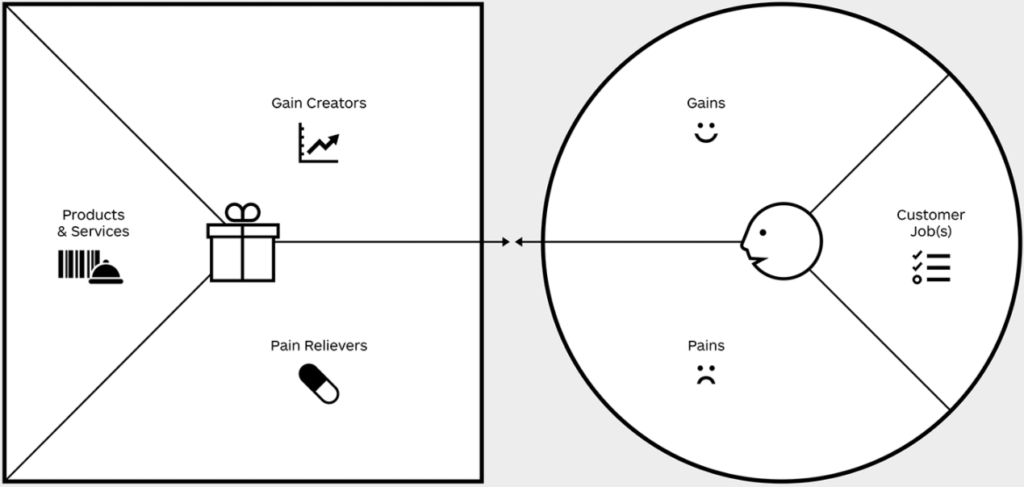
| YOUR OFFER | THE CUSTOMER |
| Products & Services: What you are selling | Customer Jobs: What are they trying to do? |
| Pain Relievers: How you take away their headache, delay, or risk | Pains: What worries them? What costs them too much? |
| Gain Creators: How you make them happy, relaxed, or more profitable | Gains: What outcome will bring them genuine satisfaction? |
The Customer’s Reality:
Their Job: What are they trying to get done? (Example: A factory owner wants to transport raw materials safely.)
Their Pain: What bothers them right now? (Example: Transporters are never on time, goods get damaged, and pricing is hidden.)
Their Gain: What do they really want? (Example: On-time delivery, GPS tracking, and straightforward billing.)
Your Solution:
Your Offer: What are you providing? (Example: Dedicated, verified transport services.)
Your Pain Relief: How do you fix their headache? (Example: Guaranteed pickup times and transit insurance.)
Your Value Add: Why will they stay with you? (Example: Clean monthly invoices and an easy tracking dashboard.)
If your offer does not directly remove a clear pain or create a real gain, you will always be forced to compete on razor-thin margins.
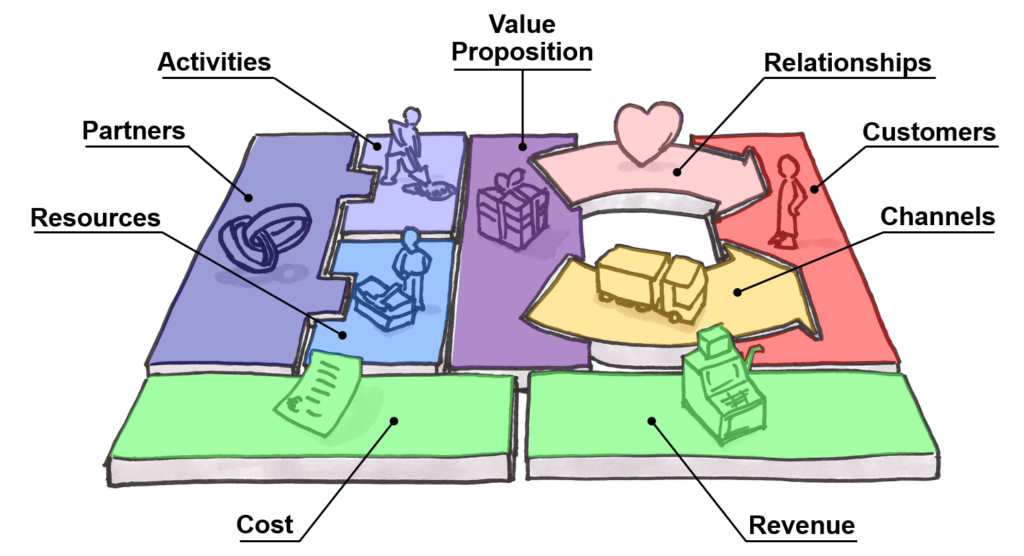
2. The Nine-Box Business Model Canvas
This is a clean way to view your entire company on one page instead of writing a 40-page report that nobody reads:
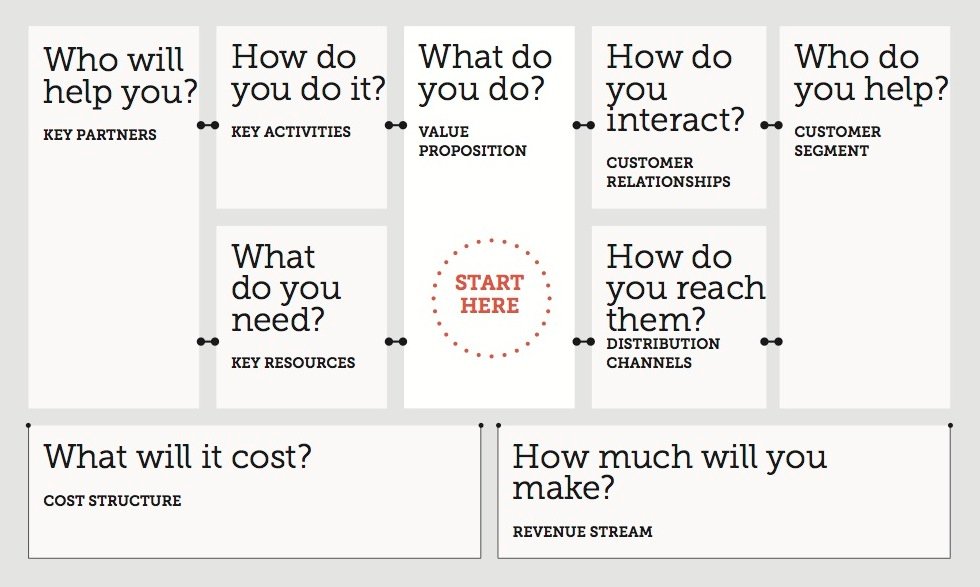
Customer Segments: Exactly who is your buyer? (Retail consumers, small shopkeepers, corporate offices?)
Value Propositions: Why should they choose you over the shop next door?
Channels: How does your product reach their hands? (Direct sales, distributor network, e-commerce?)
Customer Relationships: How do you treat them so they come back again?
Revenue Streams: What are the exact ways you make money? (One-time sales, maintenance fees, subscriptions?)
Key Resources: What raw strength do you need? (Skilled workers, capital, machinery, software?)
Key Activities: What must you execute every single day without fail?
Key Partners: Who are the external suppliers and partners you cannot live without?
Cost Structure: What are the fixed and variable costs that must be paid no matter what happens?
9. Final Thoughts: The Quiet Dignity of the Daily Grind
At the end of the day, commercial work is deeply human. It is not just about balance sheets, targets, and valuation numbers. It is about a group of real people coming together every morning to build an honest livelihood.
There will be days when things go wrong:
A big client might delay their payment right when salaries are due.
A trusted staff member might suddenly resign during your busiest season.
A new competitor might open next door and undercut your pricing.
When that happens, take a deep breath. You have not failed; this is simply the terrain of doing business in our country.
Be patient with your journey. Look after your workers with an open heart, deliver genuine value to your customers, and protect your margins with common sense. When you respect the basics, the business will stand strong and support you and your family for years to come.
- #BusinessInIndia #MSMEIndia #IndianEntrepreneurs #Dhandha #SmallBusinessIndia #StartupsIndia #MakeInIndia #BusinessBasics #FoundersJourney #BusinessMindset #TeamFirst #Vyapar